American Democracy Project Poster Series
Utilizing historic graphic design styles, design a series of five posters that address political issues across multiple scales (global, national, social, voting, and one of your choice) that you find personally significant.
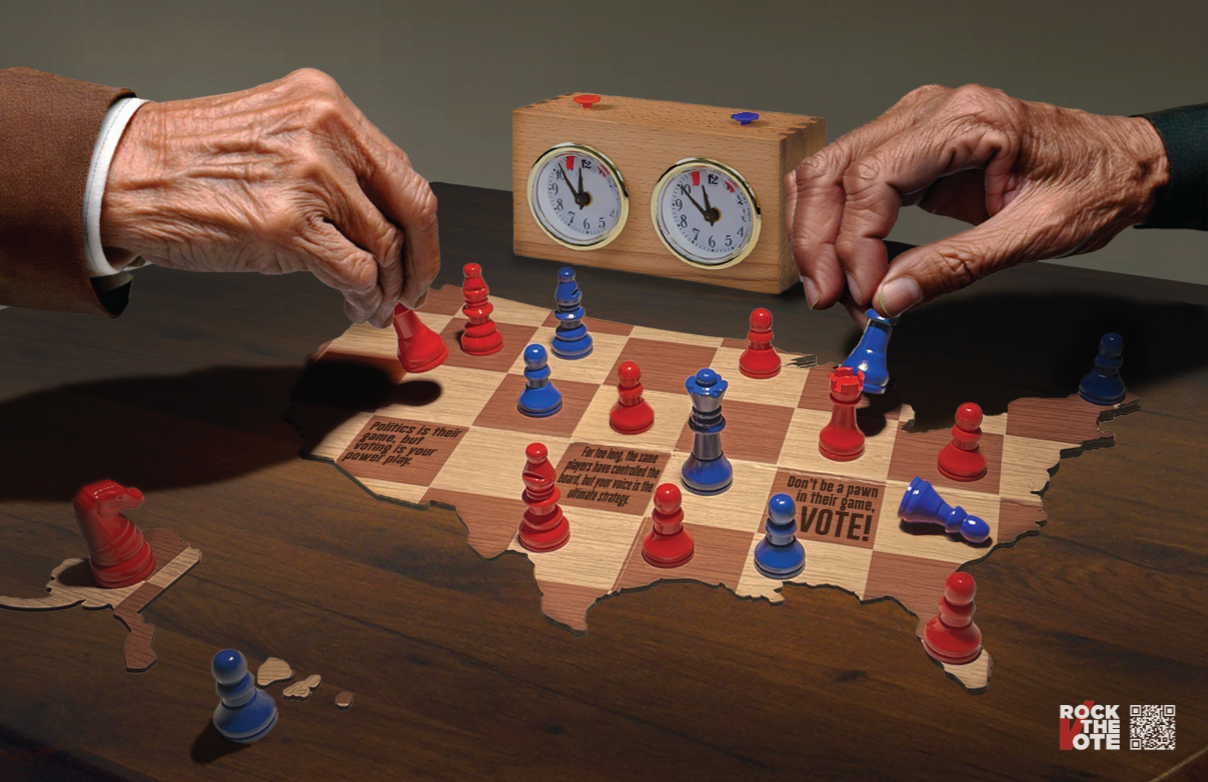
Pawns and Power Plays
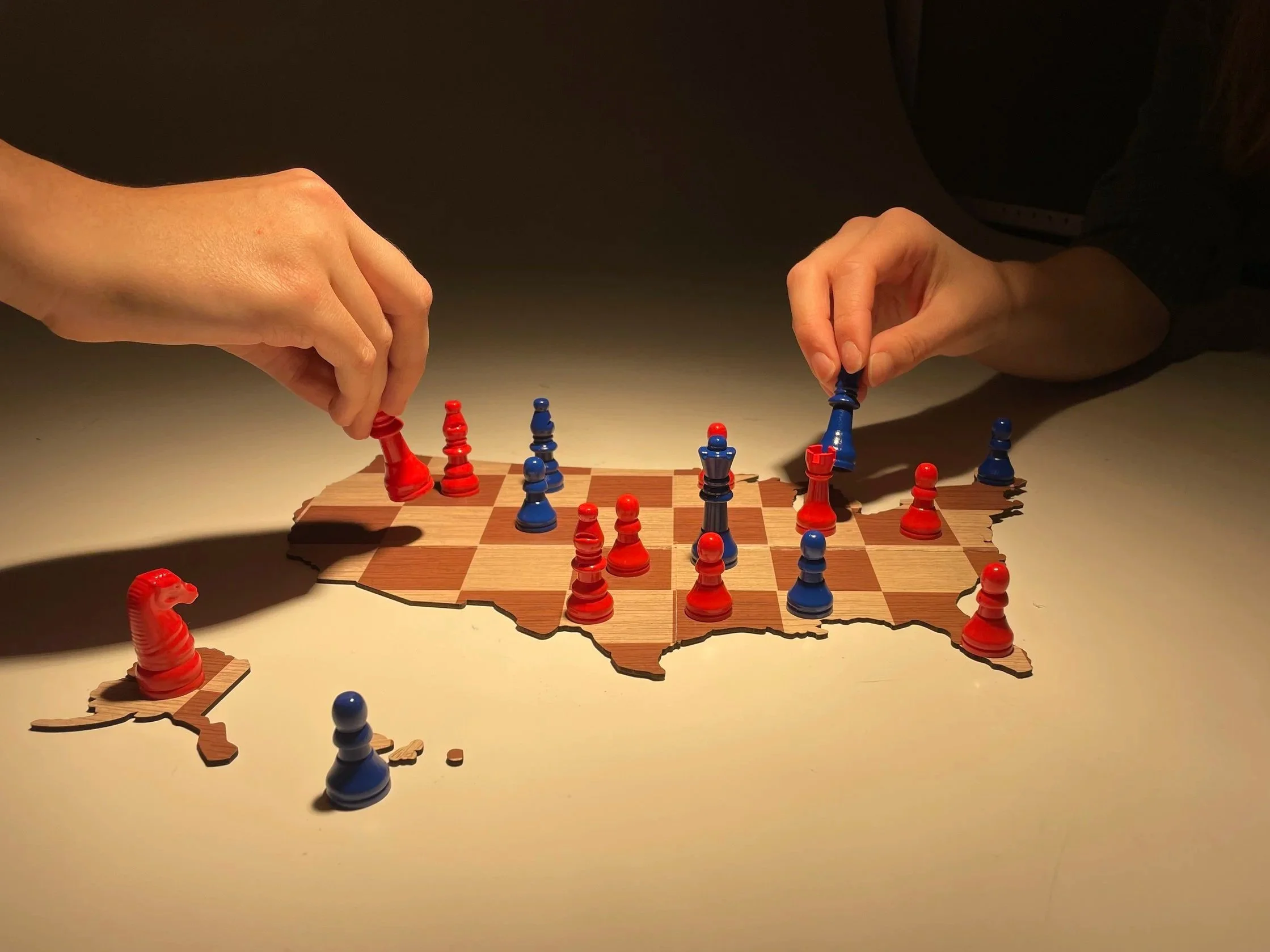
This poster reimagines the United States of America as a chessboard, representing how politics is an extremely calculated game of power. The aged players gripping the red and blue pieces symbolize the dominance of the two-party system and the players who only treat democracy like a match to be won.
This poster challenges the target audience, voters, to stop being silent pawns and start making their own power plays. Real change happens when we make our move at the ballot box.
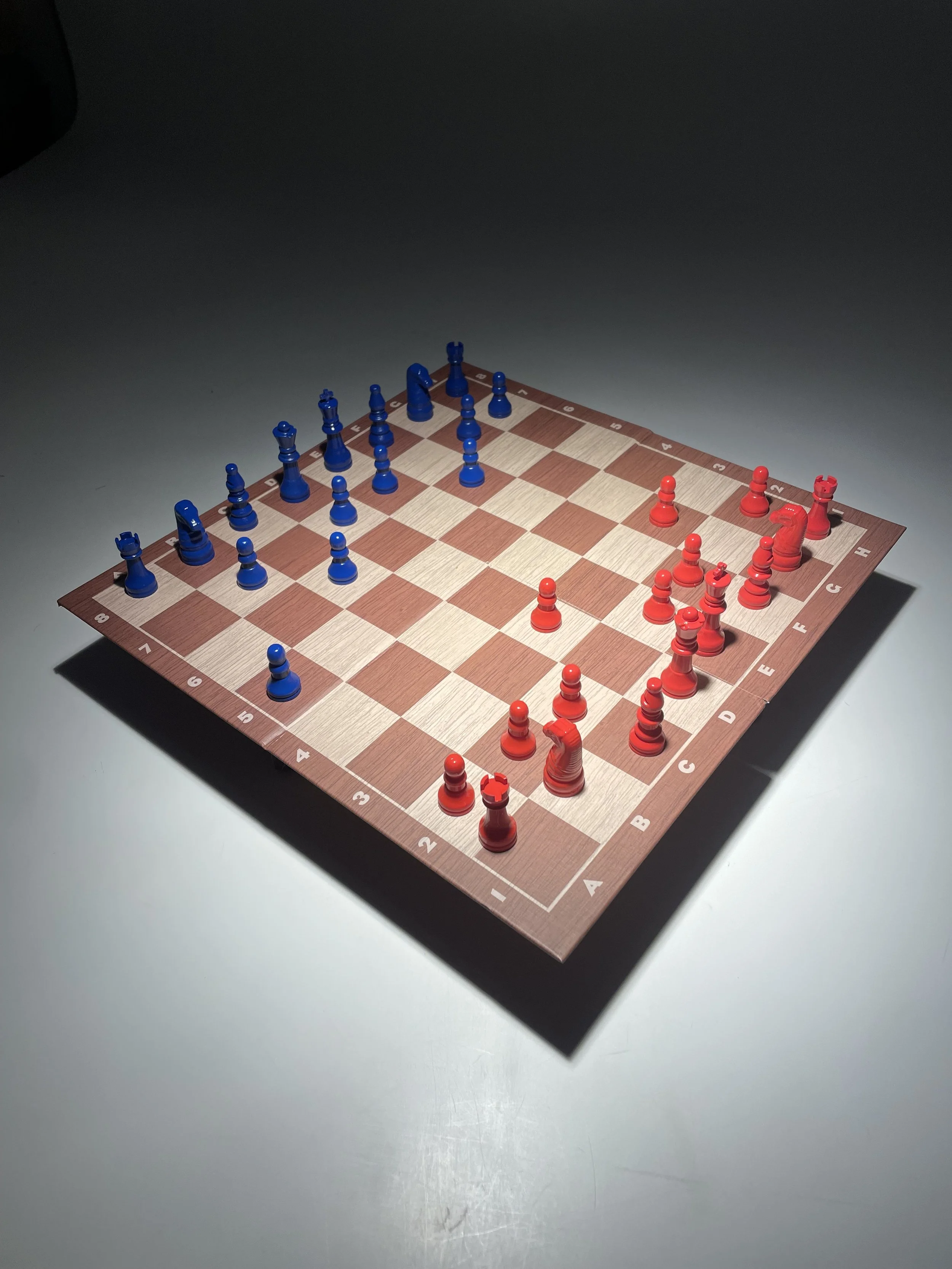
Creative Insight: Using a secondhand chessboard and a GlowForge, I laser-cut the unique shape directly out of the board. I photographed the board, including my classmates’ hands holding the chess pieces. To emphasize the concept, I was able to use generative AI to age both of my classmates’ hands from the original photo.
Behind the scenes photos shown below*
Style: Digital Revolution
Crushed by the 1%
Style: New York School
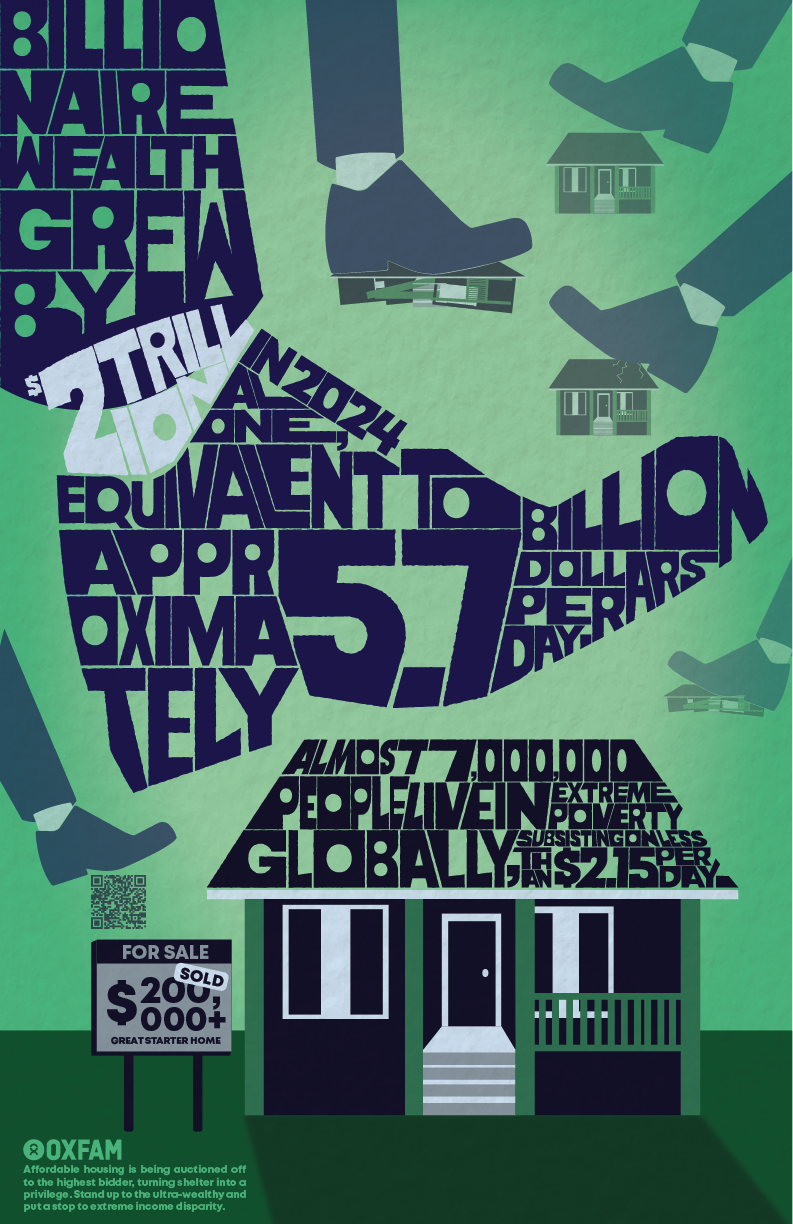
Billionaire wealth continues to surge every year, while millions of people are surviving on less and less every day. As billionaires and corporations buy up homes and resell them for profit, the dream of ownership slips further out of reach. The towering legs crushing the homes symbolize how billionaire wealth has made affordable housing and basic stability unattainable.
Through bold typography and distorted scale, the poster speaks directly to Gen Z and Millennials who feel increasingly locked out of homeownership by rising property prices and investor-owned housing.
Creative Insight: The idea for this poster originated from my fear that I won’t ever be able to afford to buy a house with the rise of the housing market.
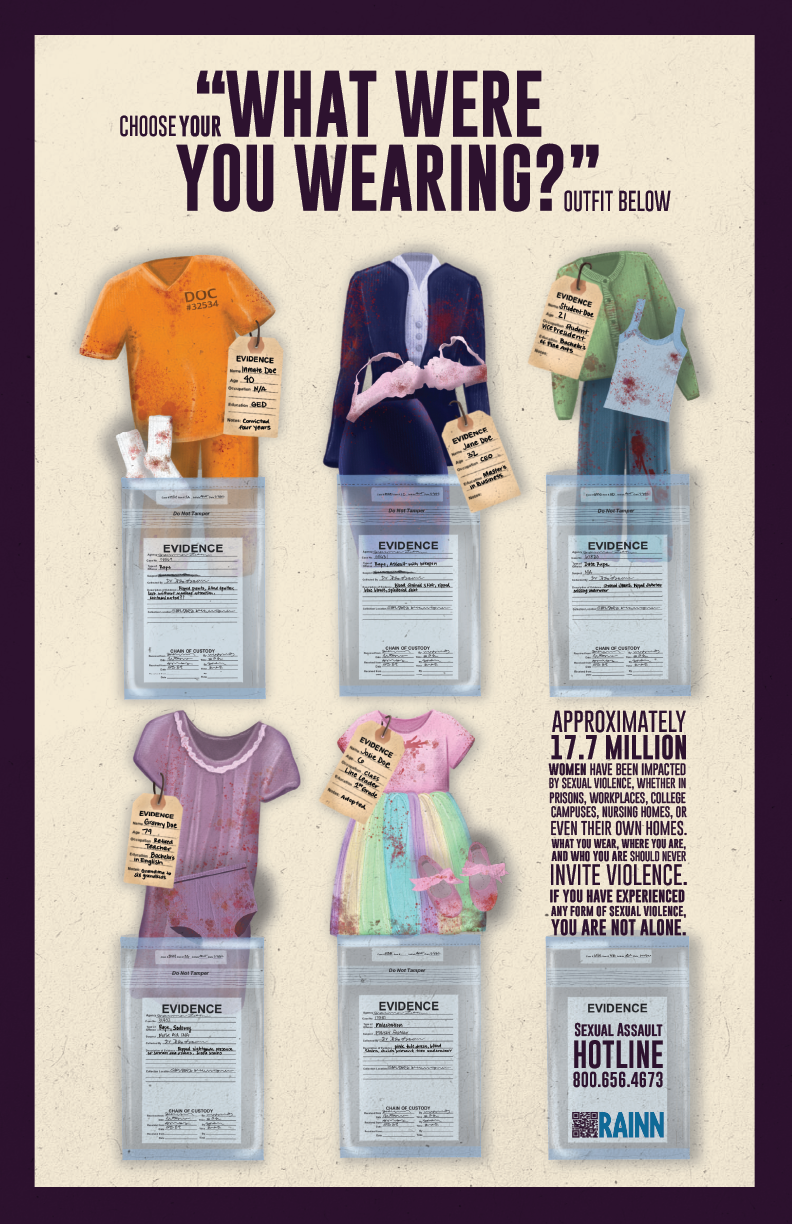
Clothed in Evidence, Not Consent
Style: Pictorial Modernism
“What were you wearing?” The pervasive victim-blaming question often used to shift responsibility from the perpetrators to the female survivors of sexual assault. By displaying women’s clothing of all types as evidence, this poster exposes the cruelty of associating sexual violence with what someone was wearing. From a prison uniform to a young girl’s dress, the garments represent the vast range of victims, emphasizing that assault can happen to anyone, regardless of their age, status, and attire.
Designed for the general public, survivors, and survivor advocates, this poster challenges victim-blaming narratives while validating survivors’ experiences. By focusing on awareness rather than accusation, it calls on viewers to stop questioning victims and start confronting the real issue: sexual violence itself.
Creative Insight: With the help of many Alani Nu Energy drinks, I digitally illustrated each clothing item and evidence bag myself.
Guess Who’s Next
Style: Post Modern
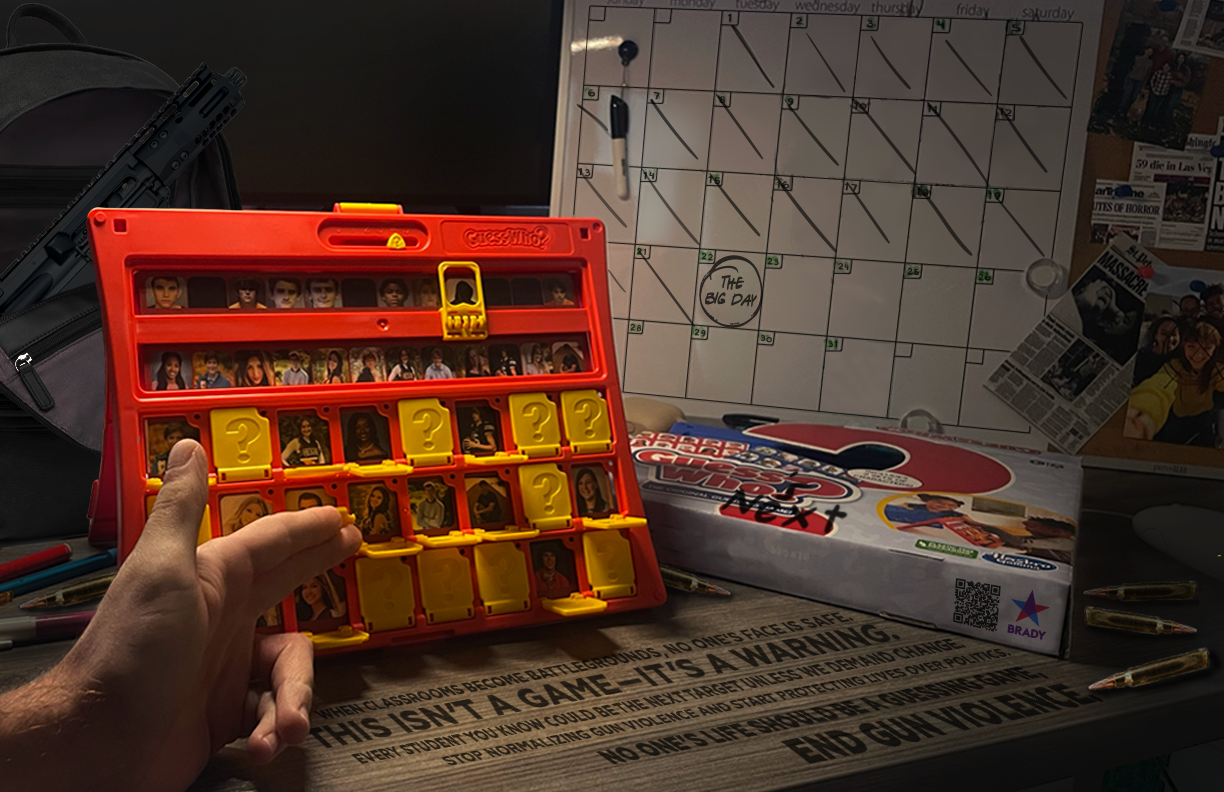
This poster addresses the horrifying normalization of school shootings in America by transforming an innocent game of Guess Who? into a chilling metaphor for gun violence. The imagery of students’ faces with the phrase “Guess Who’s Next?” exposes the grim reality that no classroom, teacher, or child is safe. By pairing familiar childhood elements with weapons, ammunition, and strategic planning, the poster illustrates how gun violence has infiltrated everyday life to the point where tragedy feels inevitable. This poster is a call to recognize that complacency costs lives, and urges viewers to prioritize protection over politics.
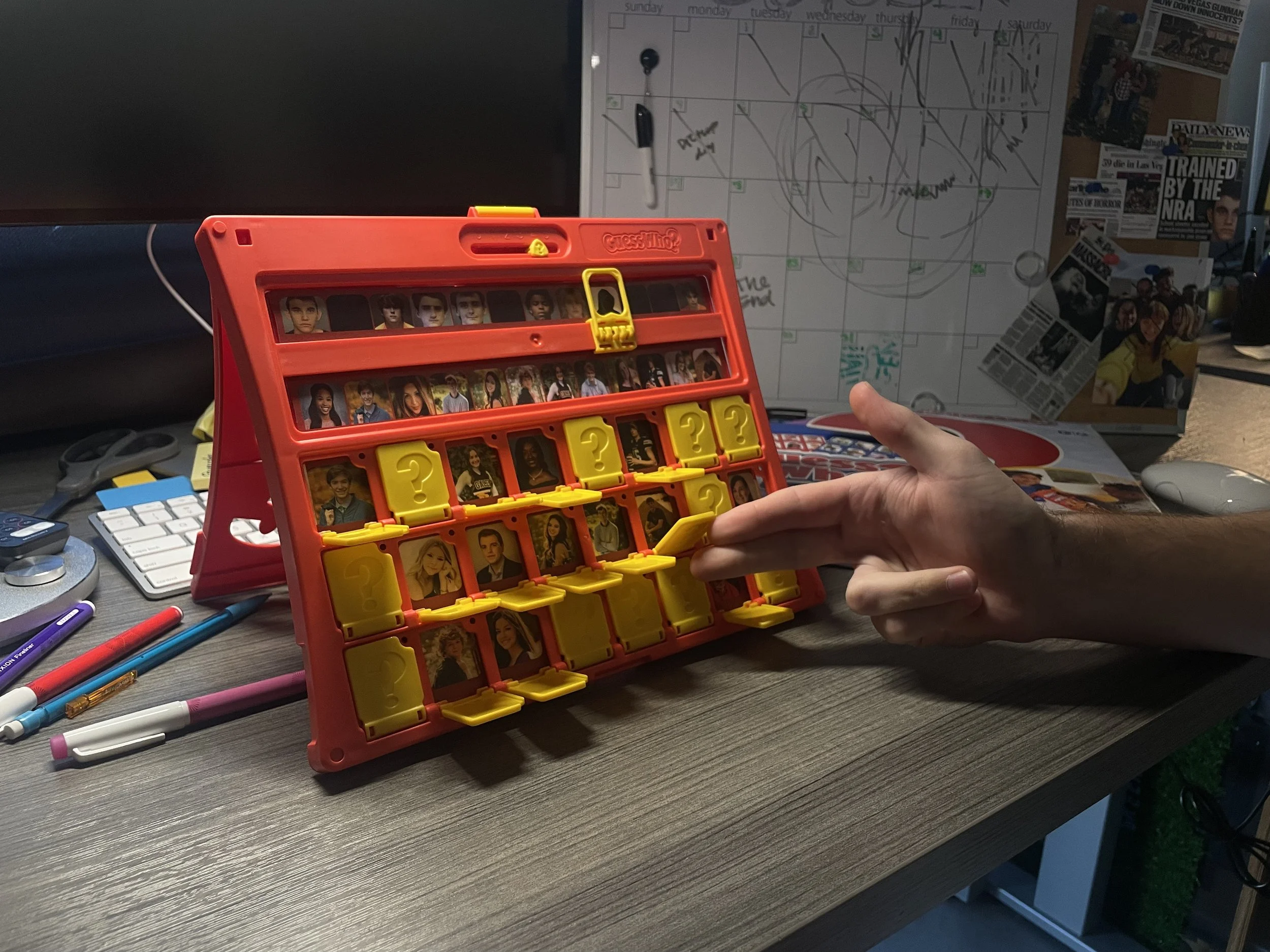
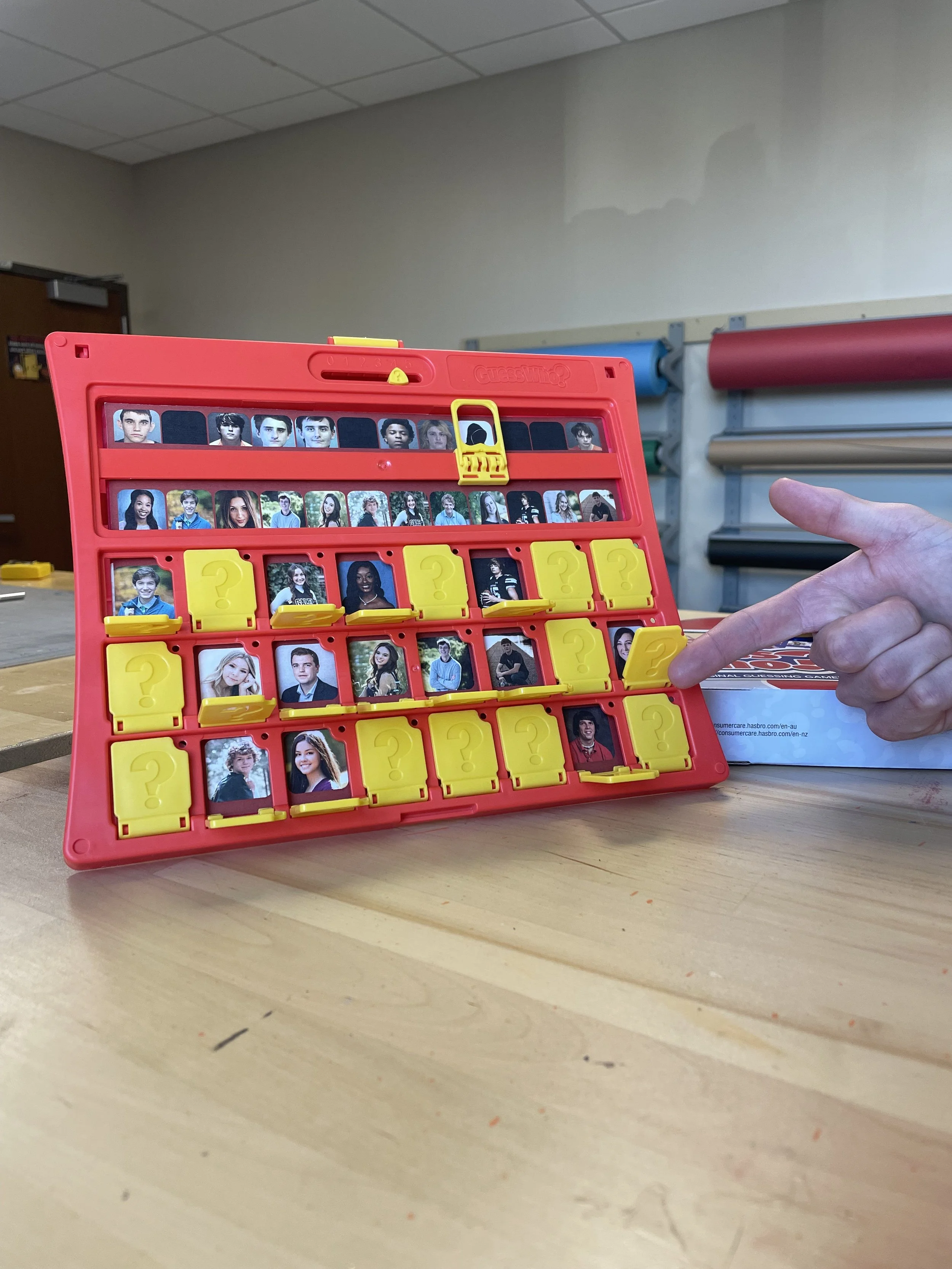
Creative Insight: The phrase “Guess Who’s Next” really sparked something in my mind and led me to use the game itself. I replaced the standard game card with a custom card: the top row shows real convicted school shooters, and the other rows show real students’ photos.
Behind the scenes photos shown below*